
More articles from Review
- Life after breast, prostate, and colon cancer: Primary care’s role
When patients survive cancer, they eventually come back to their primary care physician—with special needs.
- Reproductive planning for women after solid-organ transplant
Pregnancy can succeed, but patients must wait at least a year. Until then, meticulous contraception is mandatory.
- Apps and fitness trackers that measure sleep: Are they useful?
In general, they have major shortcomings and limited utility.
 Cardiopulmonary exercise testing: A contemporary and versatile clinical tool
It has a class I recommendation for evaluating dyspnea of uncertain cause and in candidates for heart transplant.
- Hypoglycemia after gastric bypass: An emerging complication
Post-gastric bypass hypoglycemia arises late and is probably more common than initially thought.
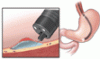
- A minimally invasive treatment for early GI cancers
Endoscopic submucosal dissection allows curative resection of early malignant gastrointestinal lesions.
- Living with hematologic cancer: Recommendations, solutions
Once-terminal diagnoses are now chronic conditions. Survivors need a plan.
- Severely frail elderly patients do not need lipid-lowering drugs
Statins have no role as primary prevention in this population, and a minor role as secondary prevention.
- Use and misuse of opioid agonists in opioid addiction
Methadone and buprenorphine can reduce craving and opioid use but remain misunderstood and underused.
- Tickborne diseases other than Lyme in the United States
Consider them in patients with known or potential tick exposure and fever or vague constitutional symptoms.