
More articles from Review
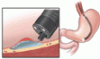
 A minimally invasive treatment for early GI cancers
Endoscopic submucosal dissection allows curative resection of early malignant gastrointestinal lesions.
- Peripartum depression: Early recognition improves outcomes
Evidence is mounting that the risks of untreated maternal depression outweigh those of treating it.
- Iodine deficiency: Clinical implications
Requirements are higher in pregnant and lactating women. Risk is higher in vegans and those who are lactose-intolerant.
- Sexual dysfunction in women: Can we talk about it?
Sexual health may be difficult to discuss, for both the patient and the provider.
- Staying afloat in a sea of information: Point-of-care resources
We can refine our skills in accessing, sorting, and interpreting scientific evidence.
- Chronic constipation: Update on management
If conservative treatments fail, clinicians can choose from a growing list of new ones.
- Postexposure management of infectious diseases
People who have been exposed to an infectious disease should be evaluated promptly and systematically.
- Bedbugs: Helping your patient through an infestation
Physicians are often at the forefront in the diagnosis and treatment of bedbug infestation.
- Autosomal dominant polycystic kidney disease and the heart and brain
Early-onset hypertension is common. Other complications include heart disease and intracranial aneurysm.
- Fall risk and anticoagulation for atrial fibrillation in the elderly: A delicate balance
The decision-making process is complex and should be shared with the patient and the patient’s family and caregivers.